Sri Sri Mayer Bari
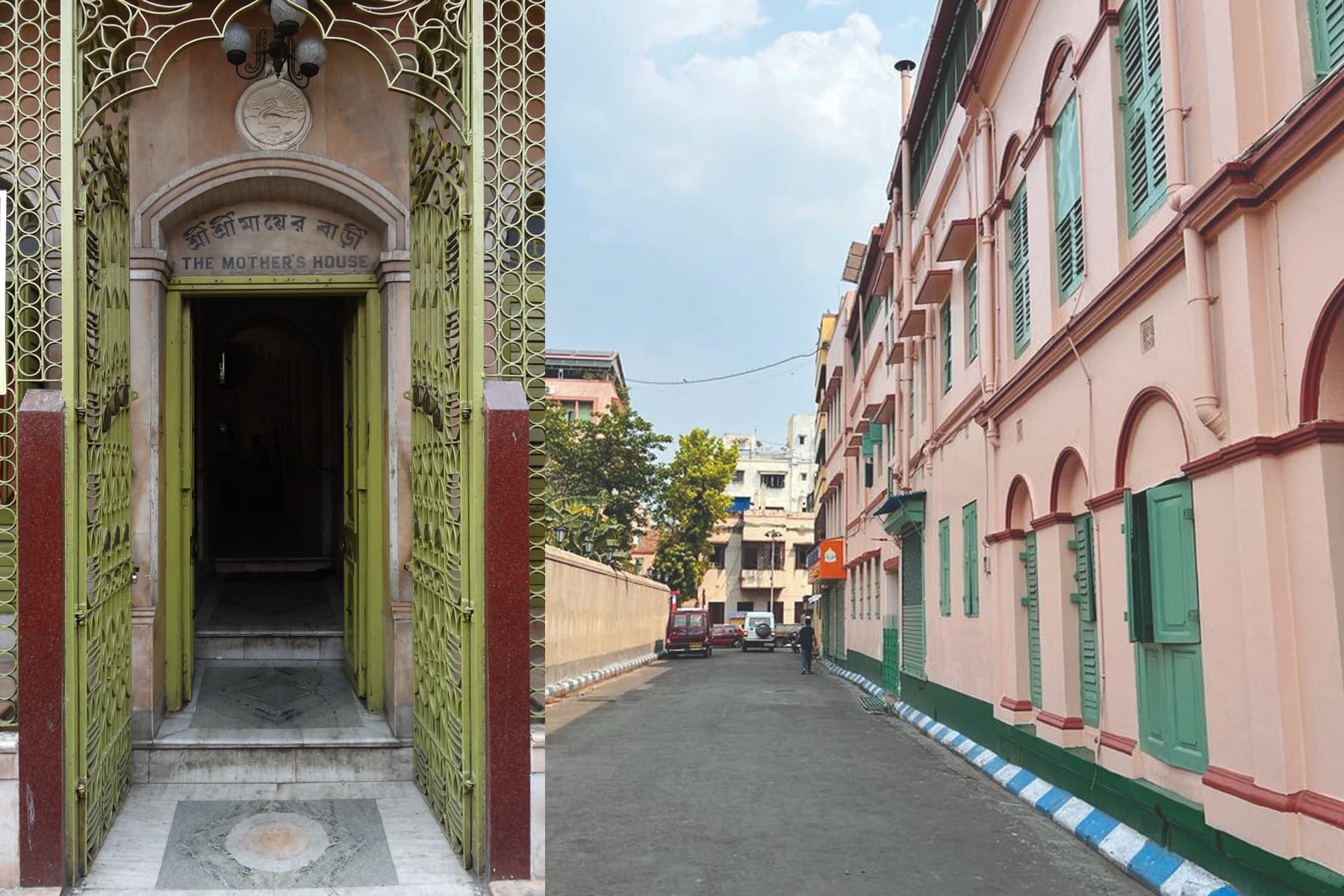
The Holy Mother's House at Bagbazar
How a small building on a Bagbazar lane, raised on borrowed money beside the Ganga, became both the office of Udbodhan and the home where Sri Sri Ma Sarada Devi lived out her Kolkata years — and the shrine it remains today.
A house that carries two names
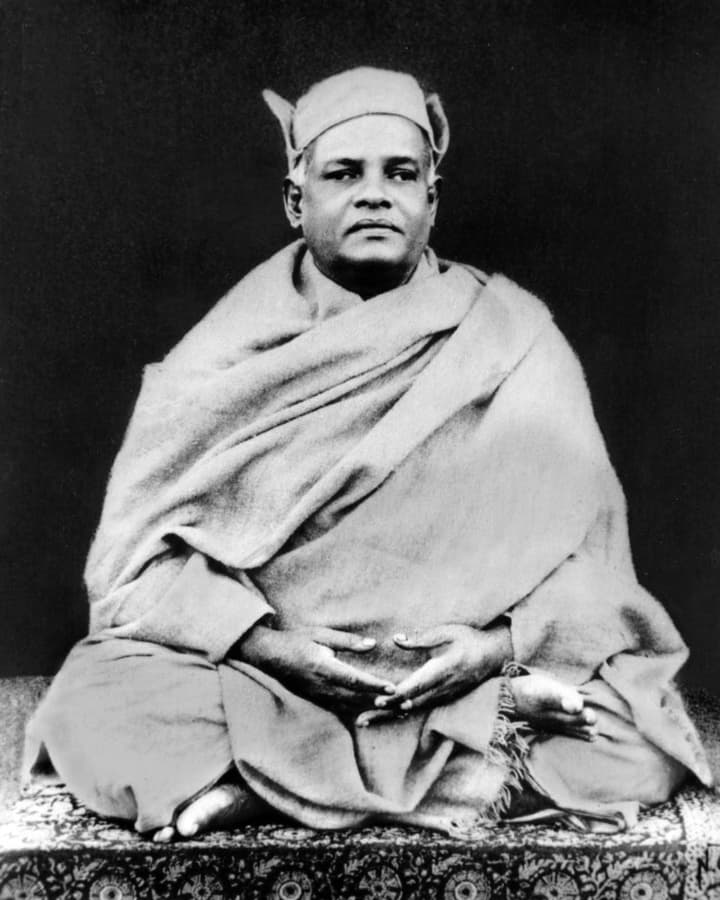
At 1 Udbodhan Lane in Bagbazar stands a house known to devotees by two names at once: "Sri Sri Mayer Bari" — the Holy Mother's House — and "Udbodhan Karyalaya," the Udbodhan office. It is a branch centre of the Sri Ramakrishna Math at Belur. The Holy Mother, Sri Sarada Devi, lived here for some eleven years. Swami Saradananda — an intimate companion of Sri Ramakrishna and the Mother's own attendant — spent nineteen years in this house, caring for her and directing from these rooms the wider work of the Ramakrishna Math and Mission. Every corner of the building is bound up with their presence.
The house was never grand. It was built, added to, and cared for by monks who thought of it first as the Mother's home and only then as anything else. In his last years Swami Saradananda put the matter plainly.
মাকে রাখার জন্যই এই বাড়ি করা। তাঁকে কেন্দ্র করে—তাঁর জন্যই সব।
This house was made only to give the Mother a home. She was its centre — everything here was for her.
Bagbazar: the ground beneath the house
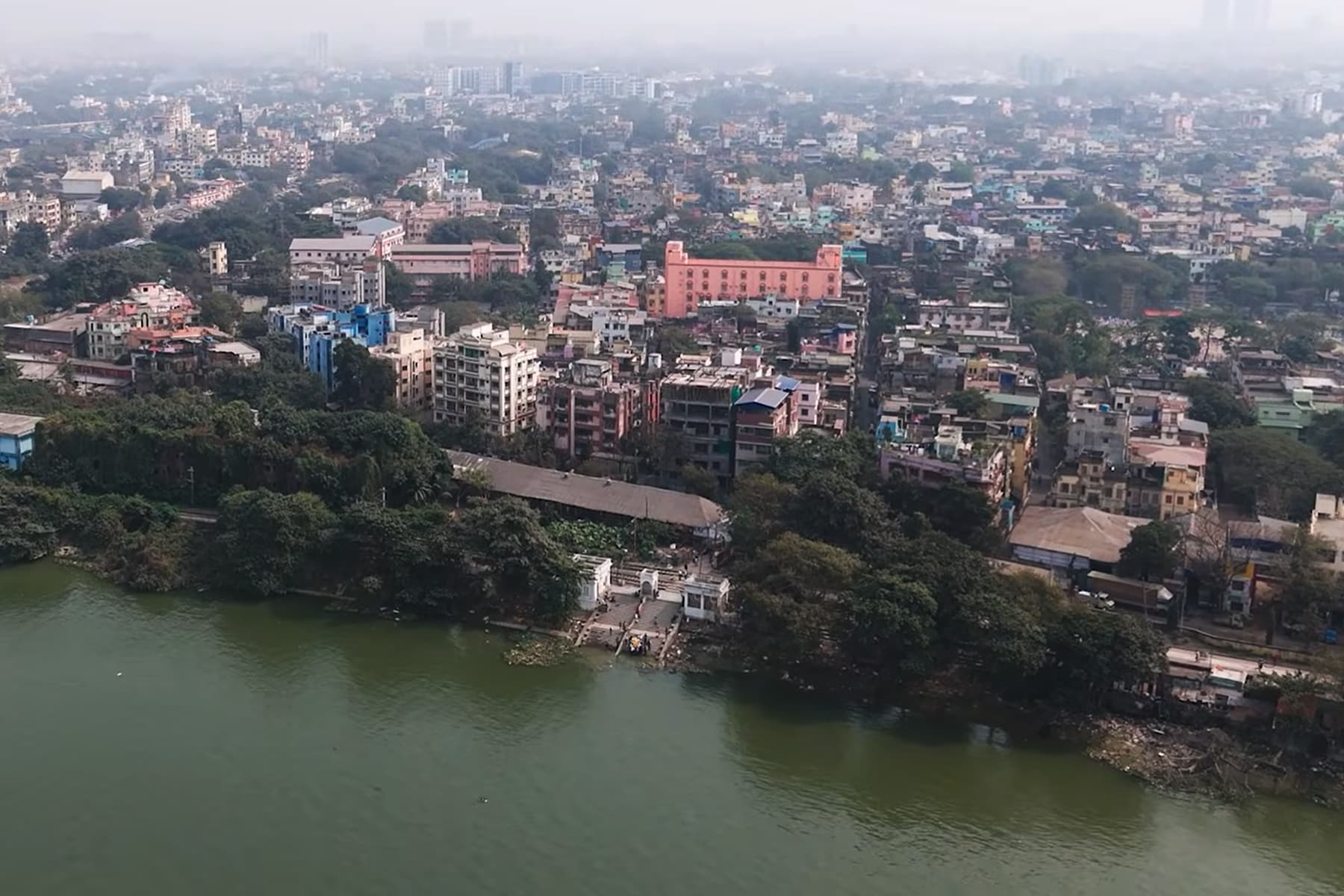
The Bagbazar of today was once the village of Sutanuti — one of the three settlements, with Kolkata and Govindpur, from which Job Charnock's city grew. Its villagers wound cotton into reels, the sutor luti, and carried them to the market at Sowabazar (today's Shobhabazar); over time sutor luti wore down in speech to Sutanuti. That old village is now called Bagbazar.
The neighbourhood keeps the marks of a harder past. To guard the northern approach against Maratha raiders, the English dug a ditch in 1742 — still remembered as the "Maratta Ditch" — and raised a fort nearby they named Perin's Fort. Before the Battle of Plassey, a clash fought here gave one spot the name "Barudkhana," the powder-house. Later the philanthropist and lime-merchant Haridas Saha gave land near the tram depot for a hospital for the poor; the road on the northern side was named, at his father's wish, Nayankrishna Saha Lane. It is on this lane that the four-storey Udbodhan office building now stands.
By the twentieth century Kolkata had become the "City of Palaces," and the current of change reached Bagbazar too. The road by the Mother's House, once Mukherjee Lane, was renamed Udbodhan Lane. The three-storey "Mayer Bari" was then the tallest house in the quarter, with an open green field stretching before it; about a kilometre off, the Maratta Ditch met the Ganga. It was exactly this quiet — the river's murmur, the soft evening light — that had earlier drawn monks such as Hari Maharaj, Gangadhar Maharaj, Latu Maharaj, Sarat Maharaj and Rasbihari Maharaj to the spot. To the south lie the Kashi Mitra cremation ghat and the Shmashaneshwar Shiva temple, ground held especially sacred: here the bodies of the devotee Balaram Babu, of Swami Yogananda, of Swami Prajnanananda, and of the Mother's attendants Yogin-Ma and Golap-Ma were given to the fire.
Why the Mother needed a house
Sarada Devi had no house of her own in Kolkata. When she came to the city she stayed in rented rooms, or with Sri Ramakrishna's householder devotees — Balaram Babu, Master Mahashay and others. As the number of her devotees grew, every visit brought crowding and difficulty. From childhood she had loved to bathe in the Ganga, and in Kolkata she bathed there daily; yet a suitable house near the river was not always to be had, and this too caused her real hardship.
Three needs therefore came together. Udbodhan had wanted a building of its own since the death of Girindralal Basak, in whose house the office had first been set up. The Mother had no settled Kolkata home and was forever shifting from one rented house to another. And her growing circle of devotees could no longer be accommodated in rented rooms. The monks felt the want of a house for her in their very bones. Swami Saradananda, secretary of the Ramakrishna Math and Mission and the Mother's attendant, resolved to build one near the Ganga.
The land came as a gift. A Bagbazar devotee of Sri Ramakrishna, known in the neighbourhood as "Khoro Kedar" — his real name Kedarchandra Das, a dealer in straw — wished to offer three katha four chhatak of land near the river in the Mother's name, on the one condition that Sri Ramakrishna be given daily worship there. On 18 July 1906 he registered the plot, at 12 and 13 Gopal Chandra Niyogi Lane, together with its two rooms. Here Sarat Maharaj planned the Mother's House.
The first building
Sarat Maharaj settled on a staged plan. The house would first be raised as a bare single storey and used as the Udbodhan office — for the office's constant moves had lost it many needed papers, and a permanent home would end that. When the second storey went up, a shrine room would be built and the Mother brought to live there, with her service and the worship of Sri Ramakrishna entrusted to Udbodhan's workers and the resident monks.
There was almost no money for it. Only 2,700 rupees, from the sale of Swamiji's books, stood in the Udbodhan fund. On the strength of that small sum Swami Saradananda began, taking a loan of 5,700 rupees on his own responsibility, and borrowing further before the work was done. The finished house held ten rooms — six on the ground floor, three on the first, one on the top — with its entrance to the north and a small back door beside the kitchen. The Udbodhan office moved in permanently in November 1908. The new branch was named Sri Ramakrishna Math, Bagbazar, and from the first it had three tasks: the service of the Mother; the housing of her relatives, of monks and of devotees; and the running of Udbodhan's publishing work.
It was in a small ground-floor room of this house that Swami Saradananda wrote Sri Sri Ramakrishna Lilaprasanga, the authoritative life of the Master — partly to repay, through its sales, the very debt the building had cost him. He wrote it amid every kind of pressure, as his own words recall: the Mother upstairs, her niece Radhu to be looked after, the press of devotees, accounts to keep, and the weight of the loan on his shoulders. He was so hard-pressed for time that, he said, people were almost afraid to speak to him while he worked.
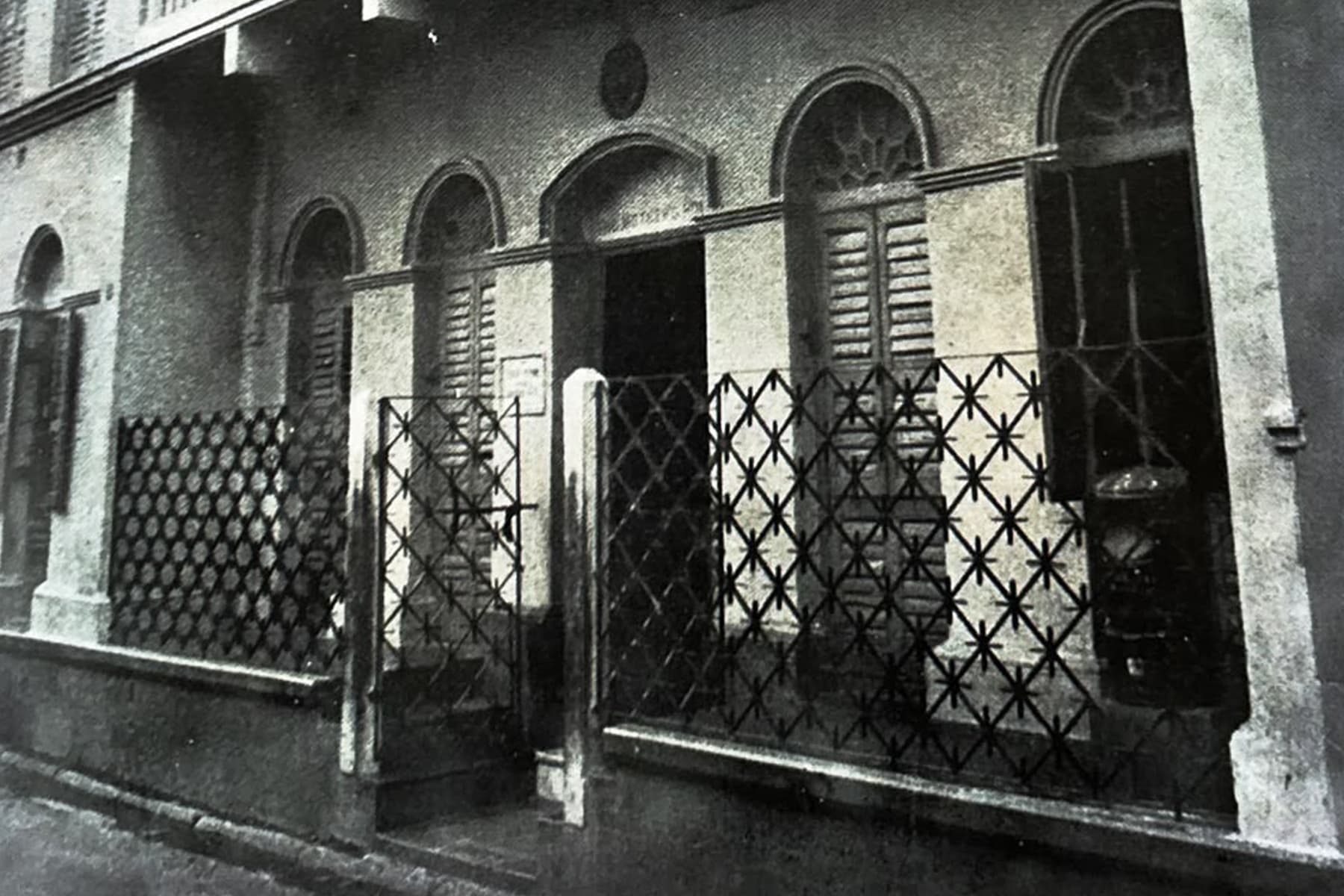
The house grows
As devotees of Sri Ramakrishna and the Mother multiplied and Udbodhan's work expanded, the house had to grow with it. In December 1909 an adjoining plot of one katha four chhatak was bought; in 1915 a room was added on the ground and first floors, with a wooden staircase, the upper room becoming Swami Saradananda's bedroom. In 1956 Kartikchandra Ghatak, of the Ghatak Property Company at Chandannagar, offered a further adjoining plot and house to the Mother; renovated during the time of the Sangha's President, Swami Shankarananda, it added a hall on each of three floors. A rear portion was bought later, under Swami Hiranmayananda. Taken all together, the Holy Mother's House now holds nineteen rooms — eight on the ground floor, six on the first, and five on the top.
The house has known notable visitors. In 1910, before he went into seclusion, the revolutionary Aurobindo Ghosh came here one Sunday to bow before the Holy Mother and take her blessing; his wife, Mrinalini Devi, and his mother also received her grace.
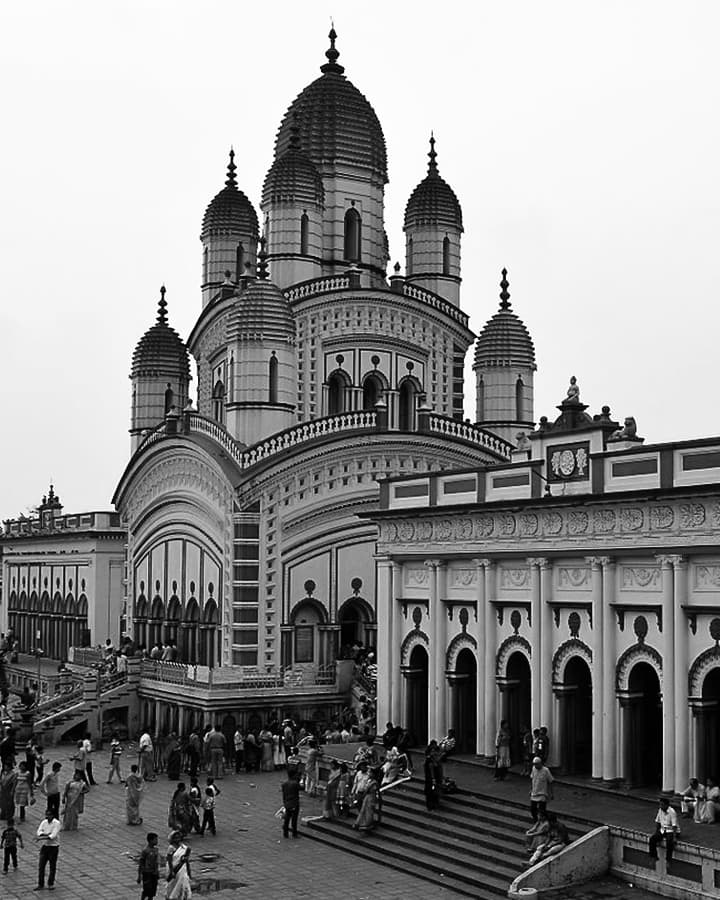
From the top floor the Mother could look out across the wide field to the temple of Bhavatarini at Dakshineswar. She would climb to the roof to dry her hair — no tall house then stood around Udbodhan to block the view — and her eyes would travel over the distant field toward the shrine across the river.
The Mother's arrival
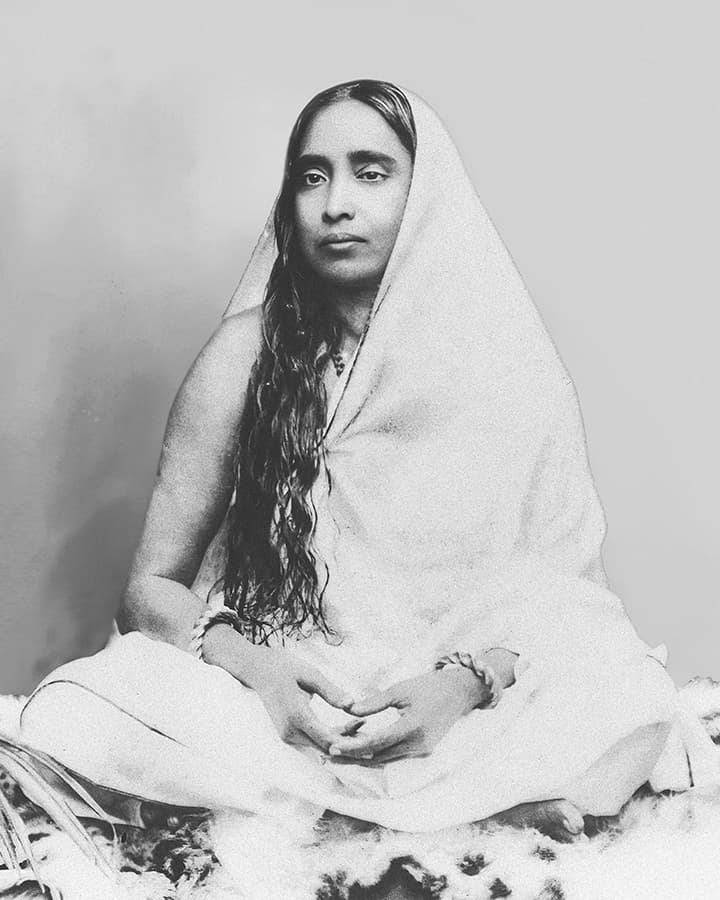
To bring her from Jayrambati, Sarat Maharaj, Yogin-Ma and Golap-Ma went and fetched her. On Sunday, 23 May 1909 (9 Jyaistha 1316), the Holy Mother set foot in Udbodhan's new house, with her niece Radhu and Maku beside her. Golap-Ma and Yogin-Ma became her lifelong attendants — Golap-Ma living in the house, Yogin-Ma coming to serve from her father's home on Bagbazar Street.
Swami Vivekananda had long wished for exactly this. As early as 1894 he had written from America to Swami Shivananda of his firm resolve to make a place for the Mother, longing for the day the "living Durga" would be settled in a home of her own.
দাদা, জ্যান্ত দুর্গার পূজা দেখাব, তবে আমার নাম।
Brother — I will show the worship of the living Durga; only then is my name worth anything.
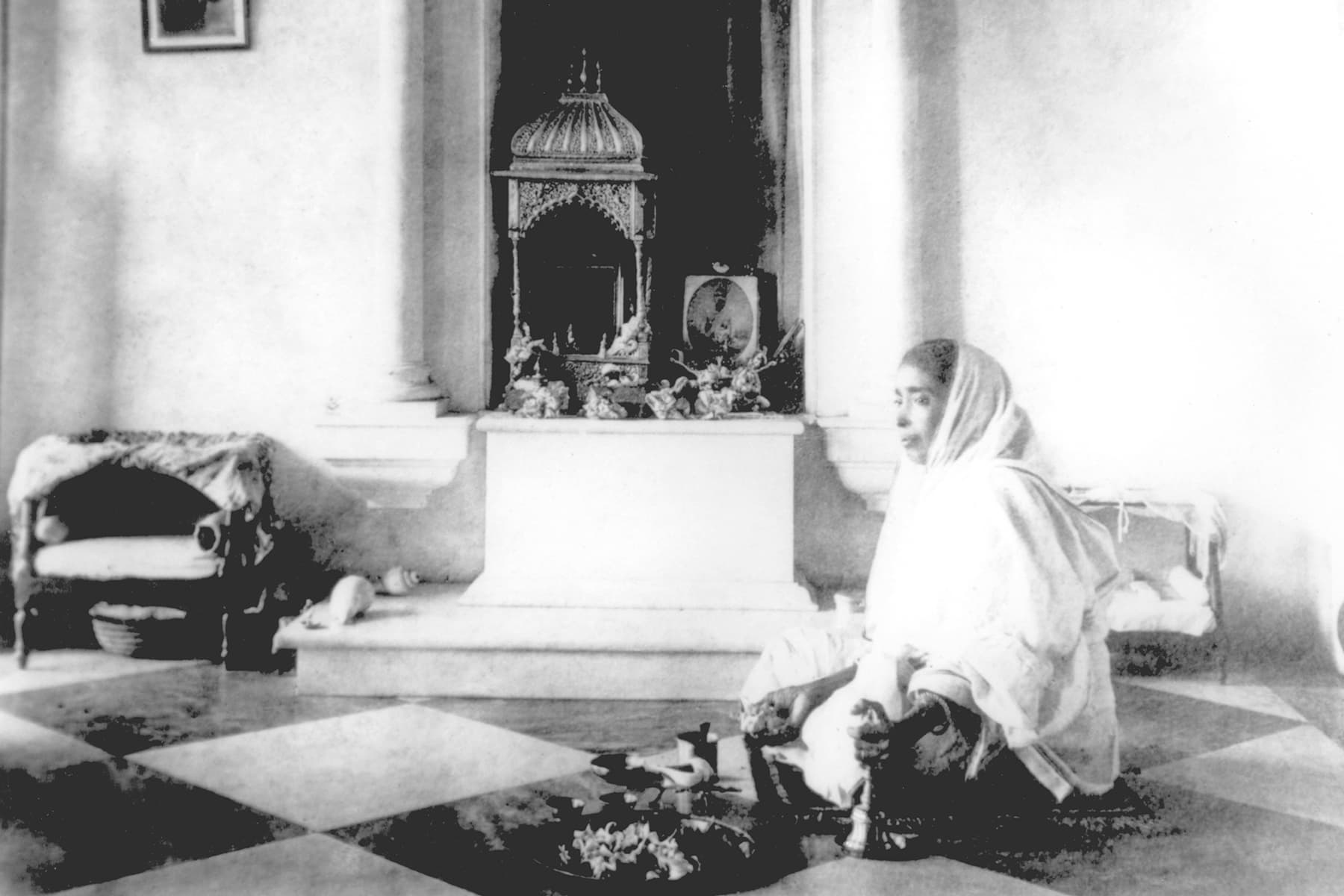
When at last the Mother saw the house, she was pleased and blessed Swami Saradananda warmly; he, for his part, took deep contentment in it, and would call himself the "gatekeeper" of the Mother's house. A shrine room had been readied in the northwest corner of the first floor, where Sri Ramakrishna's photograph was worshipped on a silver throne, beneath a silk canopy that Sister Nivedita had made for the dais with her own hands. A separate room had been set aside for the Mother's own use — but she changed the arrangement. She would not sleep apart from the Master.
ঠাকুরকে ছেড়ে আমার থাকা চলে না, থাকা উচিতও নয়।
I cannot live apart from the Master — nor would it be right to.
So, by her wish, Sarat Maharaj arranged for her to stay in the shrine room itself. There she kept and daily worshipped the photograph of Sri Ramakrishna that always accompanied her — the one the Master himself had once worshipped at Dakshineswar.
The shrine today
On 21 July 1920 the Holy Mother left her body. After her passing, her photograph was placed on the bed she had used in the shrine room, and worship of her was begun there; Sri Ramakrishna continued to be worshipped in his own place. This room is the shrine of the Holy Mother's House. The adjoining eastern room was Sarat Maharaj's; since his own passing on 19 August 1927 it has been kept as it was, and two cupboards there still hold articles used by the Mother and by Swami Saradananda.
The house has never become a museum. It remains a living centre of worship. Besides the daily service of Sri Ramakrishna and the Mother, festivals are kept through the year — the birth-tithis of the Mother and of Swami Saradananda, the Mahashtami of Durga Puja, Phalaharini Kali Puja, the night of Kali Puja, the all-night worship of Shivaratri, and such days as Christmas Eve, Ram Navami, Buddha Purnima, Janmashtami and Saraswati Puja. On Sunday, Thursday and Friday evenings, after the vesper service, devotees gather for the reading and discussion of scripture and of the Ramakrishna–Vivekananda literature.
The office of Udbodhan itself, grown too large for these rooms, has since moved to a four-storey building a short way off; but the House on Udbodhan Lane remains what it was built to be — the Mother's home, and her shrine.